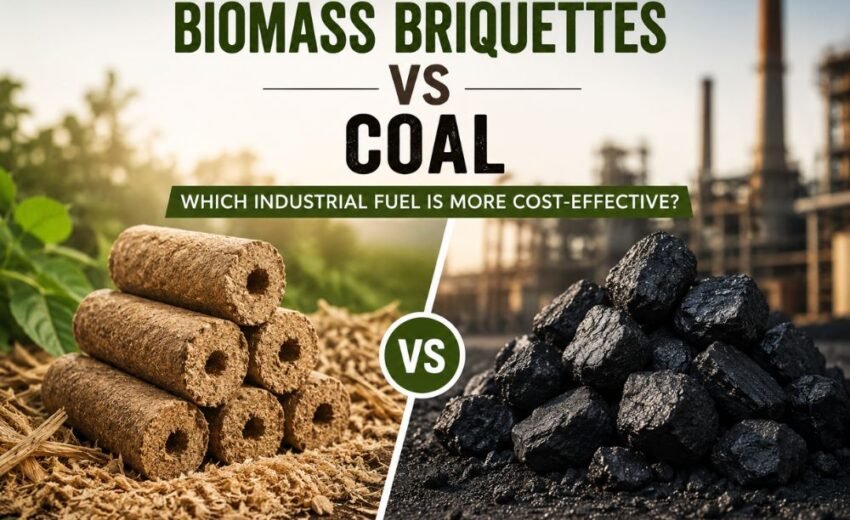
Biomass Briquettes vs Coal: Which Industrial Fuel Is More Cost-Effective?
For industries that depend on boilers, heating systems, and other thermal processes, fuel selection plays an important role in controlling operating costs and maintaining consistent energy output. Coal has traditionally been a common industrial fuel, but biomass briquettes are emerging as a sustainable and economical alternative for many industrial applications.
Zenith Bioenergy specializes in manufacturing and supplying biomass briquettes designed to meet diverse industrial energy requirements.
What Are Biomass Briquettes?
Biomass briquettes are compressed fuel products made from organic and biomass waste materials. By converting materials such as sawdust and agricultural residues into compact fuel, industries can utilize biomass as an alternative energy source.
Zenith Bioenergy currently offers three main types of biomass briquettes:
Pure Sawdust Briquettes
Pure Sawdust Briquettes are made from compressed sawdust. They provide an environmentally friendly and efficient fuel source and are suitable for heating systems and power-generation applications.
Agri-Mix Briquettes
Agri-Mix Briquettes are produced using compressed agricultural waste such as rice husk, wheat straw, and groundnut shells. These briquettes help convert agricultural by-products into useful industrial fuel while supporting better waste utilization.
Sawdust–Castor Shell Mix Briquettes
Sawdust–Castor Shell Mix Briquettes combine sawdust with castor shells. They are designed for industries looking for high-performance and environmentally friendly fuel solutions.
Biomass Briquettes vs Coal: What Is the Difference?
Coal and biomass briquettes are different types of fuel with different sources and characteristics. Understanding these differences can help industries evaluate which option better suits their requirements.
1. Source of Fuel
Coal is a conventional fossil fuel, whereas biomass briquettes are produced from organic and agricultural waste materials.
Biomass briquettes therefore provide an opportunity to transform waste materials into a useful source of industrial energy.
2. Sustainability
Biomass briquettes are made from renewable organic materials, making them a more sustainable fuel option compared with conventional fossil fuels.
Zenith Bioenergy’s mission is to provide sustainable and effective bioenergy solutions for industrial use, with a vision of becoming a leading manufacturer and supplier of biomass briquettes across the country.
3. Environmental Impact
Reducing environmental impact is becoming increasingly important for modern industries.
Biomass briquettes are promoted as having fewer greenhouse emissions compared with coal or firewood, making them an option for industries looking to adopt more environmentally responsible fuel solutions.
4. Agricultural Waste Utilization
One of the important advantages of biomass briquettes is their ability to utilize agricultural residues.
Materials such as rice husk, wheat straw, and groundnut shells can be converted into Agri-Mix Briquettes, helping turn agricultural by-products into productive fuel.
Are Biomass Briquettes More Cost-Effective Than Coal?
Biomass briquettes can be an economical alternative to traditional fossil fuels, but the actual cost advantage depends on factors such as fuel prices, transportation, consumption, equipment, and industrial requirements.
Zenith Bioenergy identifies biomass briquettes as an economical source of energy and highlights their consistent heat supply for industrial processing.
Instead of comparing only the price per kilogram, industries should consider the overall cost of producing the required heat or energy.
Important Factors to Consider When Comparing Fuel Costs
Fuel Purchase Cost
The purchase price of the fuel is an important starting point. Industries can compare the cost of their existing fuel with the delivered cost of suitable biomass briquettes.
Energy Requirements
Every industrial process has different heating requirements. The selected fuel should be appropriate for the required application and provide suitable energy output.
Fuel Consumption
The quantity of fuel required to achieve the desired heating performance should also be considered when calculating overall operating costs.
Transportation
Transportation costs can affect the final price of industrial fuel. Industries should consider the location of the supplier and the distance involved in delivery.
Equipment Compatibility
Before changing fuels, industries should evaluate whether their existing boiler or heating system is suitable for the selected biomass briquette.
Industries That Can Use Biomass Briquettes
Biomass briquettes can be considered for a wide range of industrial applications. Zenith Bioenergy highlights several industries where biomass fuel can be applicable.
Milk Plants
Milk processing facilities can evaluate biomass briquettes for suitable industrial heating requirements.
Rubber Industries
Rubber manufacturing processes can require thermal energy, making biomass briquettes an option worth evaluating for suitable applications.
Pharma Industries
Pharmaceutical industries can explore biomass fuel for appropriate heating requirements within their operations.
Leather Industries
Biomass briquettes can be considered for suitable thermal applications in leather processing industries.
Chemical Industries
Chemical manufacturing facilities with industrial heating requirements can evaluate biomass briquettes as an alternative fuel option.
Refractory Industries
Refractory manufacturing involves industrial heating processes, making efficient fuel selection an important consideration.
Brick Making Units
Brick manufacturing units can evaluate biomass briquettes for their heating and production requirements.
Ceramic Industries
Ceramic manufacturing also involves thermal processes where suitable biomass fuel can be considered.
Key Advantages of Biomass Briquettes
Biomass briquettes offer several advantages for industries considering alternative fuel solutions.
Economical Energy Source
Biomass briquettes can provide an economical energy option compared with traditional fuels, depending on the specific application and operating conditions.
Sustainable and Renewable
Because biomass briquettes are produced from organic waste materials, they can provide a renewable source of energy.
Reduced Environmental Impact
Biomass briquettes can offer an alternative to coal and firewood while supporting efforts to reduce environmental impact.
Supports a Circular Economy
Using agricultural and organic waste as fuel helps convert waste into a productive resource rather than allowing it to go unused.
Consistent Heat Supply
Biomass briquettes can provide a consistent heat supply for suitable industrial processing applications.
How Should Industries Choose Between Coal and Biomass Briquettes?
There is no single fuel solution that works for every industrial application. The right choice depends on the specific requirements of the business.
Before switching from coal to biomass briquettes, industries should evaluate:
- Current fuel consumption
- Current fuel cost
- Required heat output
- Boiler or heating-system compatibility
- Availability of suitable biomass briquettes
- Transportation requirements
- Storage requirements
- Overall operating economics
- Sustainability objectives
A proper fuel comparison should therefore focus on the overall economics and suitability of the fuel, rather than simply comparing the price of one kilogram of coal with one kilogram of biomass briquettes.
Why Choose Zenith Bioenergy?
Zenith Bioenergy focuses on sustainable and environmentally friendly energy solutions for industrial applications. The company aims to provide high-quality biomass briquettes while supporting industries in moving toward more sustainable fuel options.
Multiple Biomass Briquette Options
Zenith Bioenergy offers Pure Sawdust Briquettes, Agri-Mix Briquettes, and Sawdust–Castor Shell Mix Briquettes for different industrial energy requirements.
Focus on Sustainability
The company focuses on converting organic and agricultural waste into useful biomass fuel while promoting sustainable energy practices.
Consistent Product Quality
Zenith Bioenergy highlights consistent product quality as one of the reasons it is trusted as a biomass briquette manufacturer.
Tailor-Made Industrial Energy Solutions
Zenith Bioenergy also focuses on providing tailor-made industrial energy solutions according to customer requirements.
Conclusion
The choice between coal and biomass briquettes should not be based only on the initial purchase price. Industries should consider fuel consumption, energy requirements, transportation, equipment compatibility, sustainability, and overall operating economics.
For businesses looking for an alternative to conventional fossil fuels, biomass briquettes can be a practical and sustainable fuel option worth evaluating.
With multiple biomass briquette options and applications across industries, Zenith Bioenergy provides sustainable fuel solutions for businesses looking to explore biomass as an alternative energy source.
Looking for Biomass Briquettes for Your Industry?
Contact Zenith Bioenergy to discuss your industrial fuel requirements and explore suitable biomass briquette options.
Phone: +91 98983 76626
Email: info@zenithbioenergy.in
Website: https://zenithbioenergy.in/
Location: Ahmedabad, Gujarat, India.